Arizona Short Term Rental Law: The 2027 Ballot Push

Arizona has been the most reliable large market in the country for short term rental owners since 2016, when Senate Bill 1350 took away cities' power to ban rentals. That protection now has a date attached to it. During the week of August 21, 2026, the Resolutions Committee of the League of Arizona Cities and Towns passed a municipal policy statement at the League's annual conference in Phoenix, and four of its eight priorities target short term rentals, according to the Arizona Capitol Times: a ballot referral that would send local control to voters, a statutory increase to rental license fees, updated definitions covering mobile home parks and multifamily complexes, and lien authority for unpaid penalties.
The timing is not accidental. In 2022 the League signed an agreement with Airbnb and Expedia Group under which it would not lobby for a full repeal of SB 1350 until 2027, as the Arizona Agenda reported on January 8, 2026. The 2027 session is the first in which cities can openly campaign against the preemption law itself, and the ballot referral is the vehicle they have chosen.
Nothing changes for a host today: the Capitol Times reports that no bill will be introduced until after the November 2026 election. What has changed is the odds.
Key facts
- During the week of August 21, 2026, the League of Arizona Cities and Towns adopted a policy statement with four short term rental priorities: a ballot referral on local control, higher license fees, new definitions for mobile home parks and multifamily complexes, and lien authority for unpaid penalties, per the Arizona Capitol Times.
- No Arizona short term rental bill will be introduced before the November 3, 2026 general election.
- Under A.R.S. 9-500.39, cities may not prohibit short term rentals, may charge a permit fee of no more than $250, and may fine verified violations up to $500, $1,000, and $3,500 (or one, two, and three nights' rent, whichever is greater) within 12 months.
- The League's 2022 agreement with Airbnb and Expedia Group barred it from seeking repeal of the 2016 law until 2027, per the Arizona Agenda.
- Arizona had roughly 57,000 short term rental units among 3.3 million housing units as of May 1, 2026, and rentals were about 20% of Sedona's housing stock, per the Arizona Capitol Times.
What Arizona cities voted to push for
The League lobbies for Arizona's incorporated cities and towns, and its policy statement is the list of bills it will seek sponsors for in January. The ballot referral and the definitions change go after the preemption law directly; the fee increase and lien authority operate inside it.
The referral, as the Capitol Times describes it, would let cities "send the issue to local voters." The article does not say whether that means one statewide question or an enabling law under which each city holds its own election, and the League has not published the resolution text.
The definitions item responds to a court loss. On November 26, 2025, the Arizona Court of Appeals held in Oak Creek Hospitality v. City of Sedona that individual mobile home units are a "house or dwelling unit" under the statute, so Sedona could not refuse a rental license to a mobile home park because of the property type, and that a city may deny a permit only for the deficiencies the statute lists: unpaid fees, false application information, a suspended permit, or an applicant who is a registered sex offender or a recent violent felon. Redefining those property types is the League's way of reversing the ruling without winning the larger fight.
What the 2016 preemption still protects
The operative statute is A.R.S. 9-500.39 (counties have a twin at 11-269.17). Its first sentence does the heavy lifting: "A city or town may not prohibit vacation rentals or short-term rentals."
Since SB 1168 took effect on September 24, 2022, cities can require a permit, but the fee cannot exceed "the actual cost of issuing the permit or license or $250, whichever is less." They can also require an emergency contact, notice to neighbors before a first rental, the permit number in every listing, and liability coverage "in the aggregate of at least $500,000" or a listing on a marketplace that provides equal or greater coverage.
The penalty ladder is where the money is. A verified violation, which the statute defines as a finding of guilt or civil responsibility that has been finally adjudicated, draws up to $500 or one night's rent for the first offense, up to $1,000 or two nights' rent for the second, and up to $3,500 or three nights' rent for a third and each one after, whichever is greater. Three verified violations within 12 months, or one involving a felony, serious injury, wrongful death, or housing a sex offender, allows a suspension of up to 12 months.
Run that against real rates. A home at $400 a night pays the dollar figures, because one night ($400) is under $500, two ($800) are under $1,000, and three ($1,200) are under $3,500. A property at $1,500 a night pays the rent figures instead: $1,500, then $3,000, then $4,500, or $9,000 across three strikes before the suspension that removes a year of revenue.
What the 2026 session already tried
The League's 2026 push failed, and the way it failed explains the turn toward the ballot. Rep. Selina Bliss of Prescott introduced HB 2429 in January 2026 with a cap on rentals per city and minimum spacing between them. Both were stripped before the floor vote, KJZZ reported on March 11, 2026, leaving an occupancy limit of two adults per sleeping area plus two, a 24-month lookback for the three-strike suspension instead of 12, and suspension after one serious health or safety violation.
The House passed the amended bill 37 to 14 on March 16, 2026. The Senate never heard it. Two committee chairs declined to schedule hearings, the Sedona Red Rock News reported on April 23, 2026, and Senate President Warren Petersen's opposition to reviving unheard bills through striker amendments closed the back door, per the Capitol Times on May 1, 2026.
A consensus bill aimed at repeat offenders could not get a hearing, even though Sedona's lobbyist told the Red Rock News that Airbnb's lobbyist had joined her in asking for one. Cities took the lesson that the Legislature will not give them caps, and a referral bypasses the committee chairs who blocked HB 2429. The industry is ready for that fight: Airbnb formed an Arizona political action committee, the Airbnb Responsible Tourism Coalition, in September 2025. Governor Katie Hobbs said in September 2023 that she would support returning regulation to cities, so the obstacle is the Senate, not her office.
What each proposal would change for a host
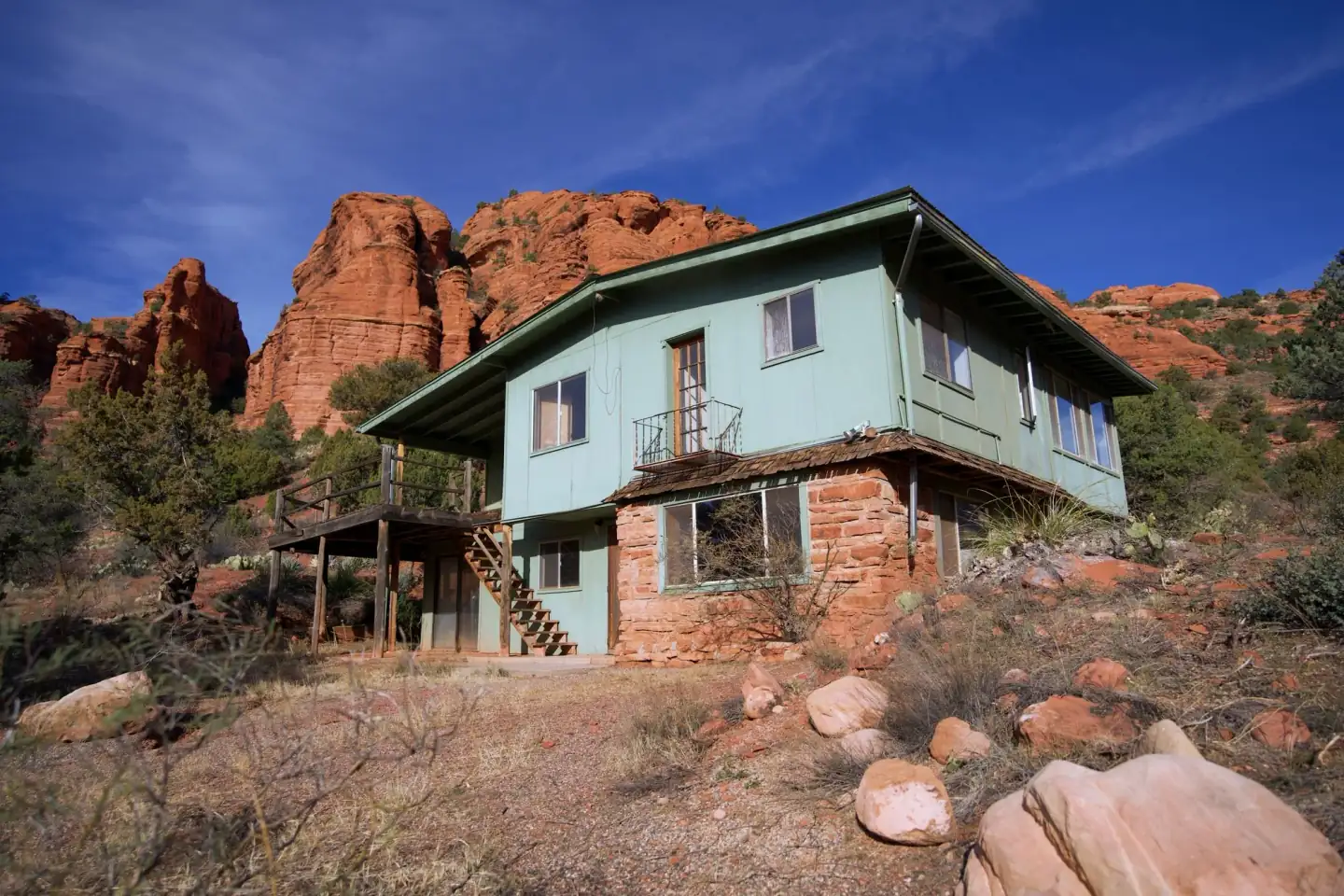
The ballot referral is the only proposal that could end the business model in a given city. If voters in Sedona, where rentals are about a fifth of the housing stock, gained the power to cap or zone them, the guarantee that a permit cannot be refused would disappear there. A cap usually grandfathers existing licenses, as the League's own January 2026 cap proposal did, so the effect lands on new buyers and on any owner who lets a license lapse; our Lincoln County post shows what a queue does to permit value.
The fee increase is quieter and easier to pass. Today the $250 ceiling means an owner grossing $60,000 a year pays about 0.4% of revenue for the license ($250 divided by $60,000 is 0.0042); at a $1,000 cap the share becomes 1.7%. That $250 figure already sits near the median first-year charge in our compliance-cost audit. That does not close a business, but it changes the math on a marginal second property, and it is the kind of concession a divided Legislature can pass in exchange for leaving preemption alone.
Lien authority turns the penalty ladder into a title problem. Current law lets a city deny a permit for unpaid permit fees, and HB 2429 had to propose unpaid fines as a separate denial ground, per Arizona's Family. A lien would attach the fine to the real estate and follow it through a sale or refinance.
The definitions change matters to a narrow group: anyone renting units in a mobile home park or a larger multifamily building. The Court of Appeals protects them today, and unlike the referral, a new definition could pass with a simple majority and the governor's signature.
What Arizona hosts should do before January
Confirm your permit posture in writing. Scottsdale charges a $250 annual license fee and requires $500,000 in liability coverage; Sedona permits run one year from issuance, and renewals must disclose any violations. If a cap arrives with grandfathering, the license you hold on the effective date is the one that counts, and a lapsed renewal is the easiest way to lose one.
Clear every open violation now. The 24-month lookback in HB 2429 will return in some form, and a violation finalized in 2026 is the evidence a city would use to suspend a permit under whatever passes in 2027.
Check the insurance floor against your actual coverage. The statute's $500,000 minimum can be met by a marketplace policy, but Airbnb's host liability insurance, by its own terms, covers "a stay booked on Airbnb." A direct booking with no separate policy is a permit condition you are not meeting. Our insurance gap post covers where host policies stop.
Build the part of the business a ballot cannot touch. A cap changes who may hold a license; it does not change whether past guests can find you. Idaho and Indiana moved the other direction on July 1, 2026, and our preemption explainer makes the same point from the opposite side: state rules can flip in a single session, and the guest relationship is the only part of the business that does not. A branded direct booking site such as the ones Haven builds carries the repeat guests, the email list, and the reviews regardless of which ordinance changes next year.
What to watch next
The November 3, 2026 general election decides which legislators exist to sponsor these bills. The 2027 session opens in January, and the first sign of movement will be a sponsor's name on a referral bill; Bliss told the Capitol Times in May that she was already working on bringing her own bill back. Watch also for whether the 2022 lobbying agreement is renewed. The Capitol Times reported that its three-year moratorium on lobbying for local regulation ran through 2025, and no successor deal has been announced. Our 2026 state law roundup shows where other states stand; Arizona remains one of the strongest preemption states in it, and the League's August vote is the first credible plan to change that.
FAQ
Is Arizona going to let cities ban short term rentals?
Not under current law. A.R.S. 9-500.39 says a city or town may not prohibit vacation rentals or short term rentals, and the Court of Appeals enforced that on November 26, 2025. The League of Arizona Cities and Towns is seeking a 2027 ballot referral on local control, but no bill can be introduced until after the November 2026 election, and a referral would still have to pass the Legislature and win at the ballot.
What is the League of Arizona Cities proposing about Airbnb rentals?
Four things, adopted during the week of August 21, 2026: a ballot referral on local control, a statutory increase to the license fee, updated definitions for mobile home parks and multifamily complexes, and lien authority for unpaid penalties. The Arizona Capitol Times reported the list; the League has not published bill text.
Did Arizona pass a short term rental cap in 2026?
No. HB 2429 started with caps and spacing rules, lost both in the House, passed the House 37 to 14 on March 16, 2026 as a repeat-offender bill, and died without a Senate committee hearing. Its sponsor has said she intends to bring it back in 2027.