Short Term Rental Permit Fee Lawsuit: The 4 Part Test

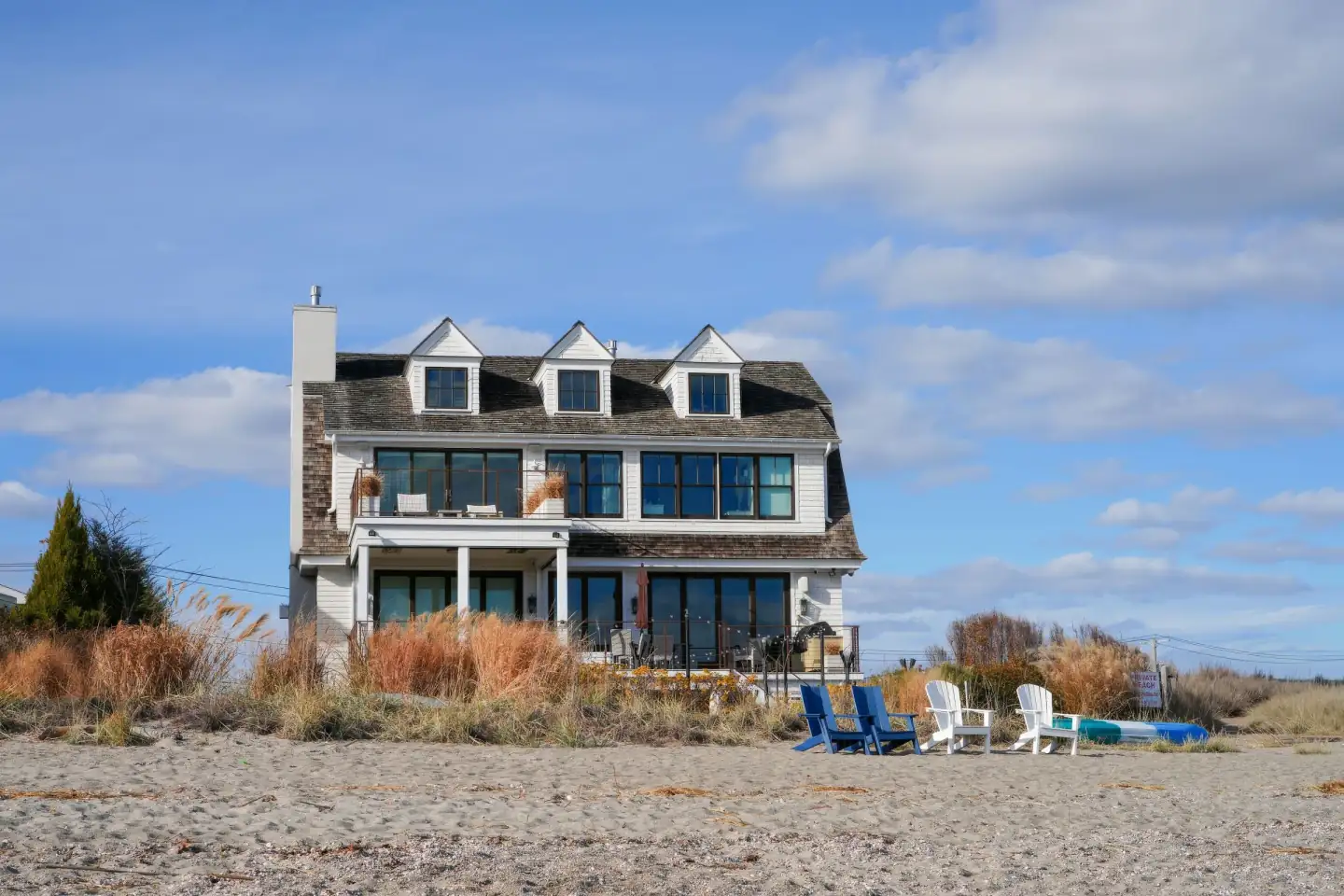
On September 3, 2026, two Folly Beach, South Carolina property owners asked a court to make the city hand the money back. David Chandler and 622 East Cooper LLC filed a proposed class action in the Charleston County Court of Common Pleas seeking refunds of the short term rental permit fee, not just for themselves but for every owner who paid it, according to ABC News 4.
The fee was $17.50 for every $1,000 of rental income, a 1.75 percent charge on gross revenue, billed on top of the city's regular business license tax. Three weeks earlier, on August 14, 2026, Judge Thomas J. Rode struck it down as an improper tax disguised as a fee. Haven covered that ruling and what it means for rental caps when it came down.
The refund suit is worth reading even if you have never been to South Carolina. Folly Beach lost its fee for two reasons that have nothing to do with a barrier island: the charge was keyed to what the rental earned rather than what the permit cost to administer, and the proceeds went into the general fund. Both are common in permit ordinances, and getting more common as cities reprice permits.
Key facts
- On September 3, 2026, David Chandler and 622 East Cooper LLC filed a proposed class action in Charleston County Court of Common Pleas seeking refunds of Folly Beach's rental permit fee, plus interest, costs and fees (ABC News 4).
- The fee was $17.50 per $1,000 of rental income, or 1.75 percent of gross rental revenue, charged in addition to the city's business license tax (ABC News 4).
- On August 14, 2026, Judge Thomas J. Rode voided the fee because it was based on gross revenue and deposited into the general fund rather than funding a specific service (Post and Courier).
- Folly Beach appealed, and the appeal was still pending when the city declined to comment on the evening of September 4, 2026 (Post and Courier).
- South Carolina bars a local governing body from imposing a new tax after December 31, 1996 unless the General Assembly specifically authorizes it (S.C. Code Section 6-1-310).
What has happened at Folly Beach since the ruling
The complaint asks the court to declare the fee invalid, stop the city collecting it unless lawfully authorized, and require Folly Beach to account for and return the fees it took from eligible owners. The plaintiffs also asked the court to shield class members' identities and licensing information so the city cannot use the list for unrelated enforcement. Joining a refund class means telling the city exactly which property you rent and what it earned, which is why that request matters.
One discrepancy matters, because the adoption date sets the outer edge of any refund window: ABC News 4 reports the fee was adopted in 2022, while the Post and Courier describes the ordinance as in effect since February 2023, matching the referendum date.
Folly Beach filed its notice of appeal, which triggered an automatic 10 day stay that kept Judge Rode's order from taking effect immediately, as ShortTermRentalz reported. The appeal is still pending, so nobody is getting a check. The refund suit rests on a ruling now under appellate review, and even if it survives, the case must still clear class certification before anyone learns who gets paid. Plan on years, not months.
The city also closed the door behind itself. On August 19, 2026 the council voted 5 to 1 to appeal and gave a license moratorium its first reading, per the Post and Courier, which reported the pause as running to February 19, 2027 or until the city's rental study is done. On August 26 the council adopted it 4 to 1, exempting renewals, waitlist applicants already offered a license, owner occupied rentals of up to 72 days a year, and the 54 applications filed right after the ruling (Live 5 News). The cap is void on paper and the license window is shut in practice.
The four part test that decides whether a fee is a tax
The reasoning in the Folly Beach order is not novel. It applies the standard the South Carolina Supreme Court restated in Burns v. Greenville County Council on June 30, 2021, which voided a county road maintenance fee and a $14.95 telecommunications fee as taxes the county could not impose.
Quoting the earlier case of Brown v. County of Horry, the court set out when a charge is a valid uniform service charge rather than a tax: "(1) the revenue generated is used to the benefit of the payers, even if the general public also benefits (2) the revenue generated is used only for the specific improvement contemplated (3) the revenue generated by the fee does not exceed the cost of the improvement and (4) the fee is uniformly imposed on all the payers."
South Carolina's statute says the same thing plainly: a service or user fee is a charge paid in return for a particular government service or program that benefits the payer in some manner different from members of the general public who do not pay it.
Read those factors against a percentage of revenue permit fee and the problem is obvious. A charge of 1.75 percent of gross rental income is not measured by the cost of processing an application or inspecting a property. It varies with how successful the rental is, which is what taxes do and fees do not. Once the money lands in the general fund, factors two and three cannot be satisfied, because there is no specific improvement to tie it to and no cost to measure it against. Per the Post and Courier's account of the ruling, the city conceded the charge was not a real service charge.
What a revenue keyed fee actually costs
A Folly Beach rental grossing $60,000 a year paid 1.75 percent of that, or $1,050 annually. Across the roughly three and a half years from the February 2023 effective date to the August 2026 ruling, that is about $3,675 from one property. A rental grossing $120,000 paid double.
Compare that to a flat fee. Ventura, California raised its annual short term rental permit fee from $204 to $1,526 effective July 1, 2026, edhat reported, alongside a cap of two permits per owner citywide. But a Folly Beach host grossing more than $87,200 was paying more than Ventura's headline number, because $1,526 divided by 0.0175 is $87,200. The flat fee is the one people notice. The percentage is the one that scales with you.
One more piece of math hosts get wrong. If you absorb a 1.75 percent revenue charge and want to hold your net, you do not raise rates 1.75 percent. You divide by 0.9825, which is a 1.78 percent increase. The gap is small at this size, but it is the same divide, do not subtract logic that makes covering Airbnb's 15.5 percent host only fee require an 18.34 percent price increase rather than a 15.5 percent one.
Where this test now bites
St. Louis is the clearest example of the structure Folly Beach just lost. Voters approved Proposition S on November 5, 2024 with 68 percent support, adding a 3 percent charge on short term rentals, with at least half the revenue going to the city's Affordable Housing Trust Fund and the rest to housing initiatives such as eviction prevention, St. Louis Public Radio reported. The implementing law took effect February 23, 2026 and operators pay quarterly, according to Avalara.
None of that means St. Louis has a legal problem. Missouri is not South Carolina, and a charge voters authorized under one state's home rule structure can be perfectly valid. The point is narrower: a 3 percent charge on rental income that funds affordable housing is measured by your revenue and spent on something other than administering your permit, which is the shape the South Carolina test rejects.
How to read your own ordinance
Start with the fee schedule, not the news coverage. Most cities publish an annual fee resolution separate from the zoning ordinance, and that is where the number lives. Then answer three things in writing: what the charge is measured by (a flat amount, a per bedroom amount, or a percentage of revenue), where the ordinance sends the money (a named program, a dedicated fund, or general revenue), and what the city says the fee pays for.
Flat inspection and administration charges are the strongest ground for a city and the weakest for a challenge: a $250 annual permit fee funding a rental compliance office is a fee almost anywhere, near the median first-year charge in our compliance-cost audit. A percentage of your gross that funds the general budget deserves a second look.
Keep your own records while you are at it: every permit invoice, every payment confirmation, and an annual gross revenue figure per property. If a refund class ever forms in your city, the hosts who can document four or five years of payments are the ones who recover. Hosts taking reservations on their own site already hold that history, since a Haven direct booking site includes analytics and a guest CRM.
What to watch next
Three things decide where this goes: whether the South Carolina appellate court affirms Judge Rode, which determines whether the refund case has a foundation at all; whether the Charleston County court certifies a class and what period it covers, which determines who gets paid; and whether Folly Beach's replacement ordinance converts the percentage into a flat charge, the move most cities make after losing this argument.
The wider pattern matters more than one town. Cities are raising permit costs faster than they are documenting what those permits cost to run, and courts are splitting: Oregon upheld an attrition based license cap in Lincoln County and the Fifth Circuit upheld New Orleans's rules in Bodin, while Folly Beach's cap and fee both fell. Our 2026 short term rental laws map tracks the state by state picture.
FAQ
Can a city charge short term rental hosts a fee based on a percentage of rental income?
It depends on the state, and in South Carolina a court just said no. On August 14, 2026 a Charleston County judge voided Folly Beach's 1.75 percent permit fee because it was calculated on gross rental revenue and deposited into the general fund rather than paying for a service. Other states authorize percentage based lodging charges explicitly, usually as taxes rather than fees, so the label matters less than what the charge is measured by and where the money goes.
What makes a rental permit fee an illegal tax instead of a legal fee?
In South Carolina, the test restated in Burns v. Greenville County Council asks whether the revenue benefits the payers, whether it is used only for the specific improvement contemplated, whether it exceeds the cost of that improvement, and whether it is imposed uniformly. A charge failing those factors is a tax, and South Carolina bars local governments from imposing new taxes after December 31, 1996 without General Assembly authorization.
If a court strikes down my city's short term rental fee, do I get my money back?
Not automatically. A ruling that a fee is invalid stops future collection, but recovering past payments takes a separate refund claim, which is what the Folly Beach hosts filed on September 3, 2026. That case must survive the city's pending appeal and then clear class certification. Keep your permit invoices and payment records either way.
Does the Folly Beach ruling apply to my city?
Not directly. It is a trial court decision in one South Carolina county, currently on appeal, and it binds nobody outside that case. What travels is the analysis: most states draw some line between a regulatory fee and a tax, and the questions are similar. Is the charge tied to the cost of the service, and does the money fund that service.
Sources
Reviewed October 13, 2026.
- ABC News 4, report on the refund class action — September 3, 2026
- The Post and Courier, reports on the ruling (August 15, 2026), the appeal vote and moratorium first reading (August 19, 2026) and the city's response (September 4, 2026)
- WCBD (August 19, 2026) and Live 5 News (August 26, 2026) on the moratorium; ShortTermRentalz on the automatic stay — August 2026
- South Carolina Code of Laws, section 6-1-310 — reviewed September 2026
- Burns v. Greenville County Council (S.C., June 30, 2021), quoting Brown v. County of Horry
- Avalara MyLodgeTax, St. Louis approves new short-term rental fee — March 2026; St. Louis Public Radio, St. Louis asks voters to tax short-term rentals to fund affordable housing — October 22, 2024
- edhat, report on Ventura's permit fee increase — 2026
- Haven Research, The Cost of Compliance in U.S. Short-Term Rental Regulation — August 24, 2026 snapshot